By Tim Frazer
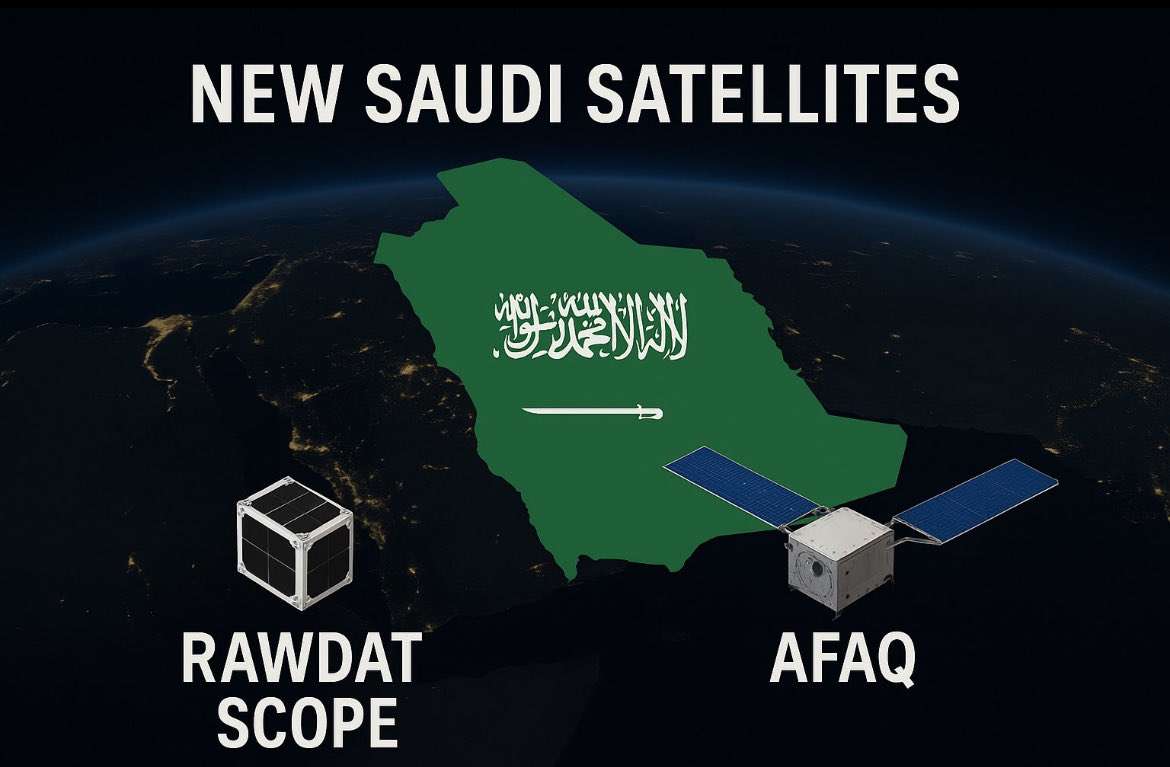
In a remarkable milestone for the Kingdom’s burgeoning space program, Saudi Arabia has successfully launched two innovative satellites, “Rawdat Scope” and “Afaq,” into orbit as part of an international mission. Designed entirely by undergraduate students from leading Saudi universities, these small satellites represent a bold step forward in fostering national talent and advancing the country’s position in the global space race.
The Saudi Space Agency (SSA) confirmed the launch in a statement released via the Saudi Press Agency (SPA) on November 30, highlighting the achievement as a testament to the Kingdom’s commitment to innovation and youth empowerment. The satellites were deployed aboard a foreign carrier rocket, joining a multinational effort to expand access to space technology for emerging spacefaring nations.
At the heart of this success is the SARI (Small Satellite Arabian Research Initiative) competition, launched in December 2024 by the SSA to inspire and equip undergraduate students across Saudi universities with hands-on experience in satellite design and engineering. Participants from Umm Al-Qura University in Mecca and Prince Sultan University in Riyadh emerged as winners, crafting “Rawdat Scope” and “Afaq” from concept to completion.
“Rawdat Scope,” developed by the team at Umm Al-Qura University, is engineered for high-resolution Earth observation, focusing on environmental monitoring and urban planning applications. Its compact design incorporates advanced imaging sensors capable of capturing detailed surface data, aiding in disaster response and resource management. Complementing it is “Afaq” (meaning “Horizons” in Arabic), created by Prince Sultan University’s students. This satellite emphasizes telecommunications and data relay, with payloads designed to test low-Earth orbit connectivity for future broadband networks. Together, the duo exemplifies the Kingdom’s push toward self-reliance in space technology.
Dr. Mohammed bin Saud Al-Tamimi, SSA’s Director of Educational Programs, praised the young engineers: “These satellites are more than hardware—they are symbols of Saudi ingenuity. Our students have not only built tools for tomorrow but have ignited a passion for space exploration in an entire generation.”
This launch marks a significant chapter in Saudi Arabia’s space journey, which began in earnest with the establishment of the SSA in 2018 under Vision 2030, the Kingdom’s transformative economic diversification blueprint. Since then, Saudi Arabia has launched 17 satellites, including the pioneering SaudiSat series in the early 2000s and more recent CubeSats like the 2021 Shaheen Sat for maritime tracking.
The Kingdom’s space sector has evolved rapidly, bolstered by collaborations with international partners such as Russia, China, and the UAE. Notable highlights include Prince Sultan bin Salman’s historic 1985 spaceflight aboard NASA’s Discovery shuttle—the first Arab and Muslim astronaut—and the deployment of Arabsat-1B during that mission, which laid the foundation for regional telecommunications.
Today, initiatives like Neo Space Group, backed by the Public Investment Fund (PIF), are positioning Saudi Arabia as a commercial powerhouse, with plans for multi-orbit satellite constellations and venture capital for space startups. The SSA aims to localize 50% of space technology manufacturing by 2030, creating thousands of high-tech jobs and contributing to a projected $10 billion industry.
The successful deployment of “Rawdat Scope” and “Afaq” underscores Saudi Arabia’s role in democratizing space access. As small satellites (CubeSats) become increasingly affordable, they enable nations like the Kingdom to leapfrog traditional barriers, contributing to global efforts in climate monitoring, disaster prediction, and sustainable development.
Looking ahead, the SSA has teased upcoming missions, including a potential lunar relay satellite in partnership with international agencies. For the student teams, the real reward lies in the data streams now beaming back from orbit—fueling theses, publications, and perhaps even the next generation of Saudi astronauts.
As Saudi Arabia gazes skyward, these launches remind us that the stars are not just for superpowers anymore. With “Rawdat Scope” and “Afaq” orbiting Earth, the Kingdom is scripting its own cosmic narrative—one innovation at a time.