By Rick Clay
This project began as an attempt to understand why the world felt as if it were tilting toward instability, but it quickly became clear that the story was not about chaos spreading outward. It was about the internal collapse of the very regimes that once projected inevitability. China, Russia, and Iran were treated for years as rising powers, each with its own narrative of discipline, ambition, and historical destiny. Yet beneath the surface, their foundations were eroding. Their economies were brittle, their demographics were collapsing, their political systems were exhausted, and their strategic choices were driven less by confidence than by fear. What emerged from this work was not three separate stories but a single arc of decline, a shared pattern in which the same structural weaknesses appeared again and again in different forms. These chapters are not predictions but diagnoses. They trace the internal logic of systems that have reached the limits of what coercion, propaganda, and managed statistics can sustain. They reveal how the collapse of one regime accelerates the collapse of the others, and how the world is now entering a period defined not by the rise of authoritarian power but by its retreat. This white paper is an attempt to map that retreat with clarity, precision, and honesty, and to understand what comes next as the global order adjusts to the end of an era.
Global Prologue
The world is entering a period defined not by the rise of new powers but by the simultaneous unraveling of the authoritarian states that once appeared poised to reshape the international order. China, Russia, and Iran, long treated as the central pillars of an emerging alternative system, are now confronting internal crises that expose the fragility of their political and economic foundations. Their trajectories, once viewed as independent challenges to Western influence, have converged into a single collapse arc driven by structural weaknesses that can no longer be concealed by propaganda, coercion, or managed statistics. Each regime built its strength on external expansion, internal control, and the illusion of inevitability. Each relied on economic models that substituted extraction for innovation, repression for legitimacy, and geopolitical risk taking for sustainable development. And each now faces a moment in which the very strategies that once fueled their ascent have become the engines of their decline.
Russia’s war driven financial exhaustion, demographic contraction, and sanctions induced isolation have pushed the country into a state of irreversible economic decay. Iran’s political instability, collapsing currency, and failing energy infrastructure have eroded the regime’s capacity to govern and to project influence beyond its borders. China, the largest and most complex of the three, is now confronting a convergence of demographic decline, deflation, financial fragility, and energy insecurity that has transformed its long standing vulnerabilities into systemic threats. Venezuela’s collapse has further accelerated this arc by severing China’s access to discounted heavy crude and undermining the energy networks that once linked these regimes together. These crises are not parallel events but interconnected failures. Russia’s collapse undermines China’s energy security. Iran’s instability disrupts the discounted crude flows that Beijing relied on to sustain its industrial base. Venezuela’s political breakdown eliminates another critical link in China’s supply chain. China’s weakening economy reduces its ability to support all three regimes financially and diplomatically. The decline of one accelerates the decline of the others, forming a single geopolitical contraction that is reshaping the balance of power.
This white paper examines each collapse not as an isolated national story but as part of a broader strategic realignment in which the authoritarian model that once appeared ascendant is now defined by exhaustion, fragmentation, and accelerating decline. Together they form a unified narrative of a global order in transition, one in which the collapse of these regimes will shape the strategic environment for decades. The era of authoritarian momentum has ended, and the world is now entering a phase defined by the consequences of their retreat.
CHINA COLLAPSE
China’s economic unraveling has entered a decisive phase, one defined not by a single shock but by the convergence of structural failures that can no longer be disguised by statistical theater or political messaging. For years, Beijing relied on the illusion of resilience, projecting strength through inflated export numbers, managed financial indicators, and a narrative of technological ascendancy. Yet beneath the surface, the foundations of China’s growth model have eroded. The country is now confronting a simultaneous collapse in domestic demand, demographic vitality, financial stability, and energy security, each reinforcing the others in a downward spiral that is accelerating rather than stabilizing.
China’s record global trade surplus in twenty twenty five, widely misinterpreted as a sign of strength, is in fact the product of unreliable data, export subsidies, and a political system that rewards inflated metrics rather than genuine performance. China’s exports to the United States contracted sharply under the tariff regime, and Beijing compensated by flooding Europe with subsidized, low margin goods that destabilize foreign industries rather than demonstrate Chinese vitality. Much of the reported export activity is either artificially subsidized or entirely fabricated through shell companies designed to capture government incentives. The surplus represents debt and distortion rather than productive output.
This external fragility is now compounded by a rapidly escalating energy crisis. China’s economic rise has been powered by imported oil, and Beijing’s long standing strategy of buying discounted crude from sanctioned regimes has collapsed. Iran is engulfed in protests and economic instability that threaten its production capacity. Venezuela’s political breakdown and the arrest of Nicolás Maduro have redirected heavy crude toward the United States and frozen billions in Chinese loans. Russia, once China’s fallback supplier, is constrained by sanctions, aging infrastructure, and Western interdictions on its shadow tanker fleet. These disruptions have exposed the fragility of China’s refinery system, particularly among small teapot refineries that depend on discounted heavy crude to survive on thin margins. Beijing has begun drawing down strategic reserves to prevent shortages, but rising energy costs are feeding inflation and eroding growth targets.
China’s collapse is not a sudden event but a cumulative process in which long standing contradictions have converged. The country’s export driven model is failing at the same moment its domestic economy is stagnating, its demographic base is shrinking, its financial system is overleveraged, and its energy security is deteriorating. The illusion of resilience has been replaced by the reality of systemic decline.
RUSSIA COLLAPSE
Russia’s collapse is the most visible and violent of the authoritarian unraveling. The war in Ukraine has accelerated every structural weakness that already existed inside the Russian state. The economy is contracting under the weight of sanctions, capital flight, and the destruction of its industrial base. Demographic decline has reached irreversible levels as young men die in combat or flee the country. The ruble has lost credibility, and the state has become dependent on emergency measures that cannot be sustained. Russia’s energy sector, once the backbone of its geopolitical influence, is now constrained by sanctions, infrastructure decay, and the loss of European markets. Moscow’s reliance on China as a buyer of last resort has created a dependency that weakens Russia’s bargaining power and accelerates its decline.
IRAN COLLAPSE
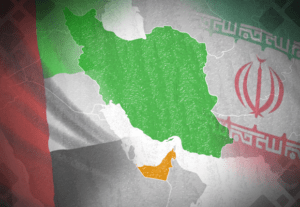
Iran’s collapse is driven by a combination of political illegitimacy, economic exhaustion, and demographic revolt. The regime faces widespread protests, a collapsing currency, and inflation that has destroyed household purchasing power. Iran’s energy infrastructure is deteriorating, and its ability to maintain production is increasingly uncertain. The regime’s reliance on repression has eroded its legitimacy, while its regional influence is weakening as domestic instability consumes its attention. Iran’s collapse disrupts China’s energy strategy and undermines the networks that once linked Tehran to Moscow and Caracas.
VENEZUELA COLLAPSE
Venezuela represents the earliest and most complete collapse in the series. Years of mismanagement, corruption, and political repression destroyed the country’s economy and forced it into dependency on China, Russia, and Iran. The arrest of Nicolás Maduro in twenty twenty six shattered the remaining structure of the regime and opened the door for American influence to return. The interim government’s decision to cut ties with Beijing and redirect oil exports to the United States eliminated a critical source of discounted heavy crude for China and froze billions in Chinese loans. Venezuela’s collapse therefore reverberates across the entire authoritarian network, weakening China’s energy position, undermining Russia’s sanctions evasion, and isolating Iran.
Unified Conclusion
The simultaneous collapse of China, Russia, Iran, and Venezuela reveals the limits of systems built on coercion, opacity, and external expansion rather than legitimacy, transparency, and sustainable growth. Each regime pursued strategies that delivered short term gains while accumulating long term liabilities, and each now confronts the consequences of those choices in ways that reinforce the decline of the others. The collapse of one accelerates the collapse of the others, forming a single geopolitical contraction that marks the end of an era in which these regimes appeared ascendant.
Final Synthesis: The Collapse Arc and the US Strategic Brief
The collapse arc aligns directly with the strategic interests of the United States. Russia’s exhaustion, Iran’s instability, Venezuela’s realignment, and China’s systemic decline collectively validate the core premise of your US strategic brief: that American power is most effective when it targets the structural vulnerabilities of adversarial regimes. The weakening of China’s energy position enhances American leverage in the Indo Pacific. The deterioration of Russia’s economy reduces its ability to sustain confrontation. The implosion of Iran limits its capacity to destabilize the Middle East. The realignment of Venezuela restores American influence in the Western Hemisphere. Together, these shifts demonstrate that the United States can shape the emerging global order by applying pressure at the points where authoritarian regimes are structurally weakest. The world that emerges from this arc will be shaped not by the rise of authoritarian power but by the consequences of its retreat.