WASHINGTON DC.
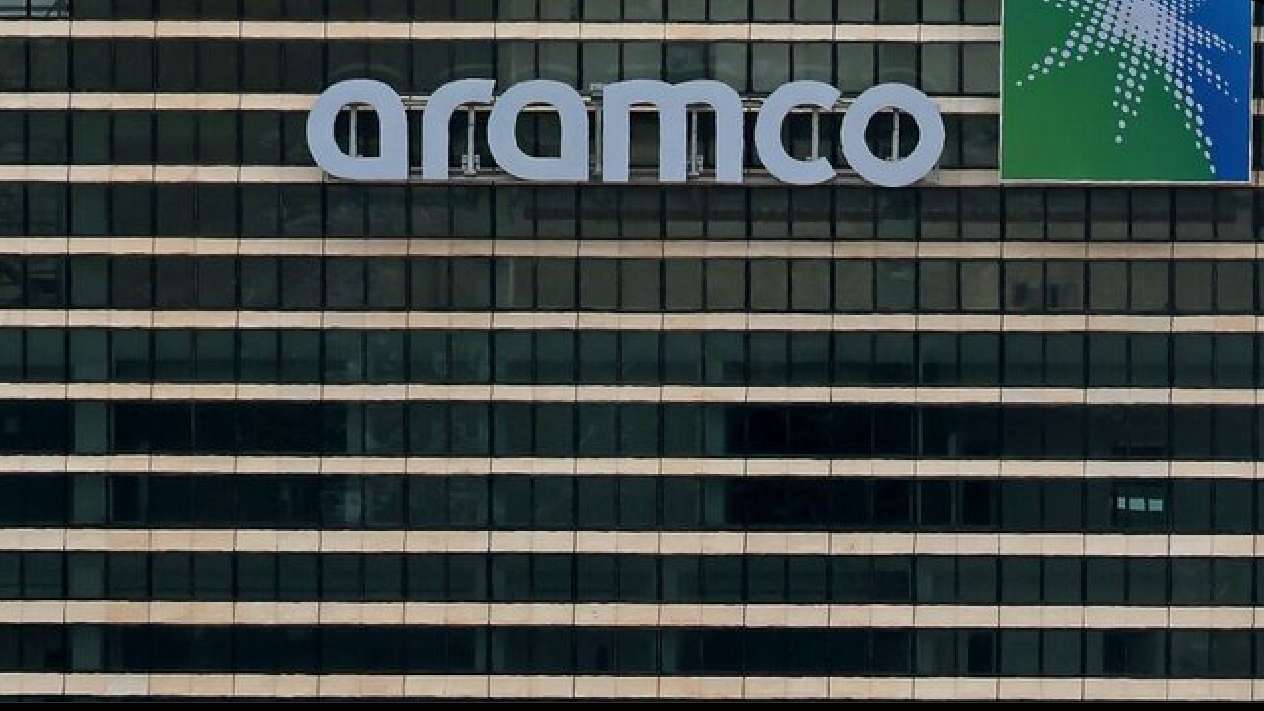
Saudi Aramco, the world’s largest oil producer, announced its 10th straight quarterly profit drop on Tuesday, highlighting the ongoing challenges facing the backbone of Saudi Arabia’s economy. The state-owned oil giant reported a 22 percent year-on-year decline in second-quarter profits, falling to 85 billion riyals ($22.67 billion) as lower crude oil prices and weakened refined and chemical product prices dragged down revenues.
In its quarterly report, Aramco attributed the revenue decline primarily to a sustained slump in global oil prices, which have hovered around $70 per barrel despite geopolitical tensions in the Middle East, including the brief Israel-Iran conflict in June. Since its peak market valuation of nearly $2.4 trillion in 2022, when oil prices surged following Russia’s invasion of Ukraine, Aramco has shed over $800 billion in market value. On Tuesday, its shares traded at 23.97 riyals, a 12 percent drop from the 27.35 riyals price of its secondary share offering in June 2024.
The profit decline comes at a critical juncture for Saudi Arabia, which is heavily reliant on oil revenues to fund Crown Prince Mohammed bin Salman’s ambitious Vision 2030 initiative. The plan aims to diversify the kingdom’s economy away from oil dependency by investing in tourism, business, and futuristic projects like NEOM, a $500 billion desert city. Last year, oil accounted for 62 percent of Saudi Arabia’s budget, and Jadwa Investment recently projected a widening budget deficit to 4.3 percent of GDP in 2025, underscoring the financial strain caused by lower oil revenues.
Despite the downturn, Aramco’s president and CEO, Amin H. Nasser, expressed optimism about future demand. “Market fundamentals remain strong, and we anticipate oil demand in the second half of 2025 to be more than two million barrels per day higher than the first half,” Nasser stated in the report. This outlook aligns with recent moves by the OPEC+ alliance, which includes Saudi Arabia, Russia, and other key producers. On Sunday, the group announced a production increase of 547,000 barrels per day, partially unwinding cuts of 2.2 million barrels per day that were implemented to bolster prices.
Industry analysts had anticipated Aramco’s profit drop, citing a combination of OPEC+ policy shifts and broader economic uncertainties. “Oil market forces are more downwards than upwards in the first half of 2025, due to OPEC+ policy shifts and economic uncertainty stemming from the US trade war,” said Ibrahim Abdul Mohsen, an analyst based in Abu Dhabi. However, he emphasized Saudi Arabia’s resilience, noting that the kingdom’s substantial financial reserves would help maintain stability and support Vision 2030 projects in the short term.
Aramco, which went public in 2019 with the world’s largest initial public offering, raising $29.4 billion for 1.7 percent of its shares, has continued to play a pivotal role in Saudi Arabia’s economic strategy. A secondary offering in June 2024 raised an additional $11.2 billion for 0.64 percent of its shares, while a 16 percent stake has been transferred to the Public Investment Fund (PIF), the sovereign wealth fund driving much of Vision 2030’s transformative projects.
As Saudi Arabia navigates the challenges of low oil prices and a transitioning global energy landscape, Aramco’s performance remains a critical indicator of the kingdom’s economic health. While the road ahead may be turbulent, the company’s leadership and Saudi Arabia’s robust financial reserves provide a buffer to pursue its bold diversification agenda, even as oil revenues face continued pressure.