By Ernest Francis
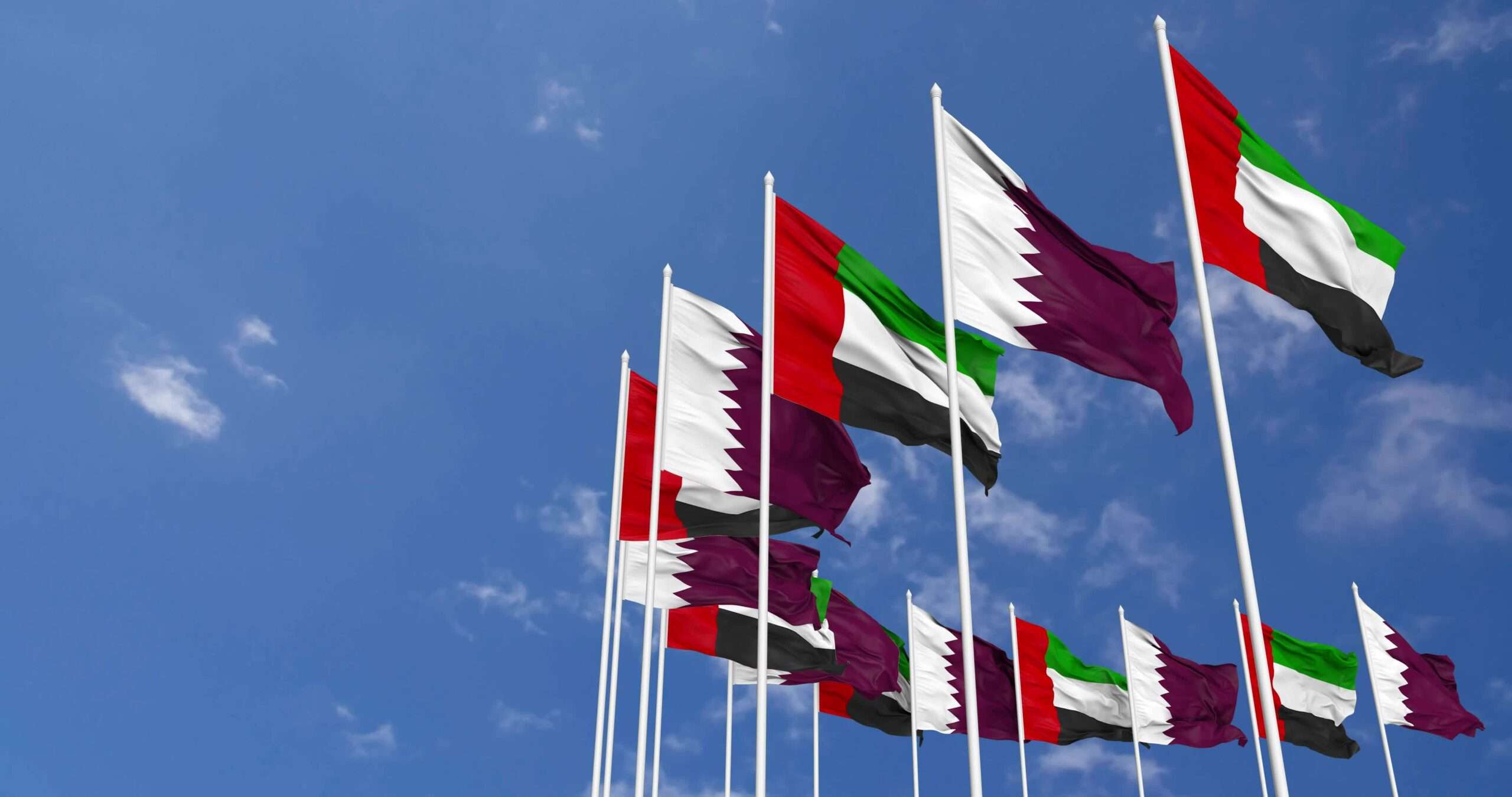
The decision by Qatar and the United Arab Emirates to formally join a U.S.-led technology supply-chain initiative marks a strategic turning point not only for the Gulf, but for the global competition over technological power. According to a Reuters report, both countries are set to become members of Pax Silicon, an American-driven framework designed to secure critical technology supply chains—particularly in artificial intelligence and semiconductors—at a time of intensifying geopolitical rivalry.
What makes this development especially significant is that Pax Silicon brings together Gulf states and Israel within the same economic-technological architecture, despite the region’s longstanding political fractures. This is not a symbolic alignment. It reflects a deeper recalibration of how economic security, technology, and geopolitics now intersect.
From Alliances to “Capability Coalitions”
U.S. officials describe Pax Silicon not as a traditional alliance, but as a “coalition of capabilities.” Participation is based on what each country contributes industrially—whether advanced manufacturing, critical minerals, data infrastructure, or computing power—rather than formal political alignment. This approach allows Washington to build a resilient technological ecosystem without the constraints of classical treaty structures.
Currently, the initiative includes Israel, Japan, South Korea, Singapore, the United Kingdom, and Australia. Qatar is expected to sign on January 12, followed by the UAE on January 15. Their inclusion underscores Washington’s recognition of the Gulf as an indispensable node in future technology supply chains.
Why the Gulf Matters
The Gulf’s strategic value goes far beyond energy. The UAE, in particular, has positioned itself as a regional leader in artificial intelligence, advanced logistics, and data infrastructure, while Qatar brings capital, sovereign investment power, and increasing interest in high-tech diversification. For the Trump administration’s economic strategy—focused on reducing dependence on rival states and reinforcing cooperation among trusted partners—this combination is crucial.
Pax Silicon aims to secure the entire technology value chain: from critical minerals and advanced manufacturing to high-performance computing and data infrastructure. In doing so, it aligns directly with Washington’s broader objective of reshaping globalization around trusted networks rather than open dependency.
Practical, Not Symbolic
Unlike many multilateral initiatives that remain largely declarative, U.S. officials emphasize that Pax Silicon is designed to be operational. It coordinates real projects, harmonizes policies, and protects sensitive technologies and infrastructure. Over the coming year, the framework plans to expand membership, launch strategic supply-chain projects, and deepen coordination on economic security.
Discussions are also underway to modernize trade routes—such as the India-Middle East-Europe Corridor—by integrating advanced American technologies. This signals a shift from viewing trade corridors merely as physical infrastructure to treating them as digitally enabled strategic assets.
Israel’s Role and the Emerging Tech Axis
As part of the broader Pax Silicon effort, American and Israeli officials are preparing to launch a linked strategic framework that includes the establishment of Fort Foundry One, an industrial complex in Israel aimed at accelerating high-technology projects. Parallel talks on artificial intelligence cooperation are expected to lead to a preliminary memorandum of understanding by mid-January.
This deepening U.S.-Israel-Gulf technological convergence reflects a new Middle Eastern reality: one where economic and technological pragmatism increasingly overrides ideological divisions.
A New Economic Map for the Middle East
The timing of the announcement—just ahead of the Future Minerals Forum in Riyadh—highlights the growing centrality of critical minerals and supply-chain security in global economic planning. As the world races toward AI-driven growth, control over inputs, infrastructure, and innovation ecosystems will define power.
For the Gulf states, Pax Silicon offers more than partnership with the United States; it provides a pathway toward genuine economic diversification rooted in technology rather than hydrocarbons. For Washington, it represents a scalable model for economic statecraft in an era where technology security is national security.
In this sense, Pax Silicon is not merely an initiative—it is a blueprint for how the next phase of globalization will be organized: selective, capability-driven, and strategically aligned.