By Kasondra Watkins
President Donald Trump’s nomination of Kevin Warsh as Chairman of the U.S. Federal Reserve is not a routine leadership change. It represents a deliberate effort to dismantle the long-standing post-1951 consensus that insulated U.S. monetary policy from direct executive influence. At stake is not merely the direction of interest rates, but the institutional architecture that has governed the relationship between the White House and the central bank for more than seven decades.
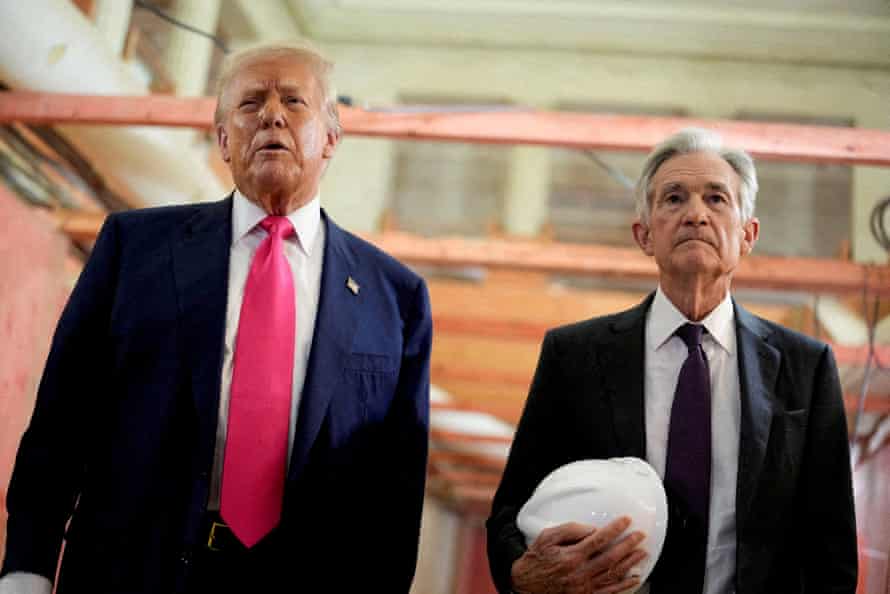
The nomination comes amid an unusually politicized moment for the Federal Reserve. Tensions between the administration and the current Fed leadership under Jerome Powell have intensified following a Department of Justice investigation into cost overruns related to the renovation of the Federal Reserve’s headquarters, alongside a high-profile legal battle involving Governor Lisa Cook. Together, these developments have transformed what is typically a technocratic institution into a focal point of political and legal confrontation.
Warsh’s appeal to Trump lies in his rare combination of market credibility, institutional experience, and strategic alignment. Appointed to the Federal Reserve Board in 2006 at the age of 35, he remains the youngest governor in the institution’s history. During the 2008 global financial crisis, Warsh played a pivotal role as an intermediary between the Federal Reserve and stressed financial markets, earning enduring trust on Wall Street. For an administration skeptical of what it views as an overly academic, insular Fed culture, this market fluency is a decisive asset.
Ideologically, Warsh has long been associated with monetary hawkishness and sharp criticism of the Federal Reserve’s expanded balance sheet. However, his views have evolved. In recent essays and speeches, Warsh has argued that the U.S. economy is undergoing a productivity-driven transformation powered by artificial intelligence, automation, and digital infrastructure. According to this framework, higher productivity suppresses inflationary pressures, allowing for lower interest rates without destabilizing price expectations. This thesis aligns closely with Trump’s demand for rate cuts to sustain growth and investment.
If confirmed, Warsh is expected to pursue a dual-track strategy: lowering short-term interest rates while accelerating the reduction of the Fed’s $6.6 trillion balance sheet. Such an approach would likely steepen the yield curve, allowing long-term rates to rise even as borrowing costs at the front end fall. Proponents argue this would restore more efficient capital allocation and curb fiscal excess; critics warn it could disrupt credit markets if executed too aggressively.
Beyond monetary mechanics, Warsh has proposed closer coordination between the Federal Reserve and the Treasury Department, potentially including asset-swap mechanisms involving mortgage-backed securities and short-term Treasuries. While framed as a technical solution to housing-market distortions, such proposals would further blur the line between fiscal and monetary authority.
Politically, Warsh’s nomination has fractured Washington. He enjoys strong backing from Republican leadership and significant support within the financial sector, which views him as a stabilizing alternative to more ideological candidates. Opposition is concentrated among progressive Democrats and institutionalists who warn that his appointment could set a dangerous precedent for politicizing the central bank.
Ultimately, Warsh’s nomination symbolizes a broader struggle over the future of American economic governance. Whether confirmed or not, it signals the possible end of the old Federal Reserve consensus—and the emergence of a more openly contested, politically engaged era of U.S. monetary policy.