By Nabimara Benson
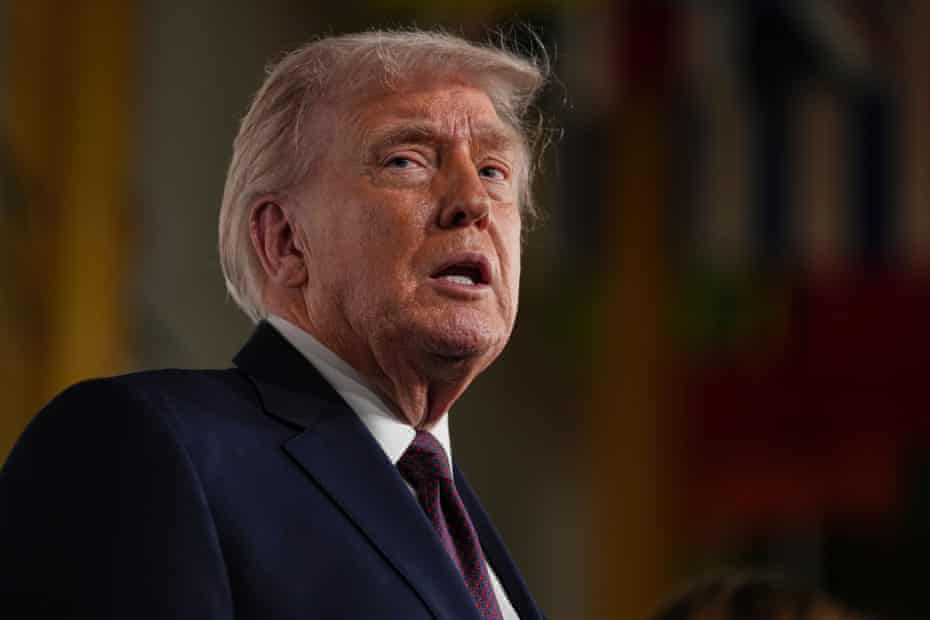
President Donald Trump, along with his sons Donald Trump Jr. and Eric Trump, and the Trump Organization, has filed a federal lawsuit against the Internal Revenue Service (IRS) and the U.S. Treasury Department, seeking at least $10 billion in damages over what the suit describes as the unauthorized leak of their confidential tax records.
The civil complaint, filed in the U.S. District Court for the Southern District of Florida in Miami, accuses the agencies of failing to safeguard sensitive financial information that was allegedly disclosed by a former IRS contractor in 2019 and 2020.
At the center of the allegations is Charles “Chaz” Littlejohn, a contractor who worked for Booz Allen Hamilton under IRS oversight. Littlejohn pleaded guilty in October 2023 to one count of unauthorized disclosure of tax return information and was sentenced to five years in federal prison in 2024. He admitted to leaking President Trump’s tax records to The New York Times, which published a detailed report in September 2020 revealing that Trump paid just $750 in federal income taxes in 2016 and 2017 and claimed no taxes at all in 10 of the previous 15 years. Littlejohn also confessed to stealing and sharing tax data on thousands of other wealthy individuals, including high-profile figures such as Jeff Bezos and Elon Musk, with outlets like ProPublica.
The lawsuit claims the IRS and Treasury Department breached their duty to protect taxpayer privacy, allowing the leaks despite having “mandatory precautions” in place. The plaintiffs argue that the disclosures caused “significant and irreparable harm,” including reputational damage, financial losses, public embarrassment, tarnished business reputations, and being portrayed in a false light. They also contend that the information was shared with “leftist media outlets,” leading to widespread publication that negatively affected their public standing.
A spokesman for Trump’s legal team issued a statement saying, “The IRS wrongly allowed a rogue, politically-motivated employee to leak private and confidential information about President Trump, his family, and the Trump Organization to the New York Times, ProPublica and other left-wing news outlets, which was then illegally released to millions of people.” The statement added, “President Trump continues to hold those who wrong America and Americans accountable.”
The timing of the suit comes just days after Treasury Secretary Scott Bessent announced the cancellation of all department contracts with Booz Allen Hamilton, citing the breach involving Littlejohn. Those contracts were valued at approximately $21 million.
The case is unusual because it involves a sitting president suing agencies within the executive branch he oversees. The Treasury Department oversees the IRS, and neither agency immediately responded to requests for comment on the filing. The IRS previously described Littlejohn’s actions as “unacceptable” in a 2024 statement and said it had taken steps to strengthen data security.
This lawsuit fits into a broader pattern of legal actions by President Trump since his return to office. He has filed multiple high-profile suits against media organizations and others, often seeking large sums in damages. In one prior instance, he sought $230 million from the Department of Justice related to past investigations. Critics, including some Democrats, have called the current suit an attempt to extract taxpayer funds, with one Senate Finance Committee member describing it as “shameless” and hypocritical given ongoing administration policies.
The complaint does not specify how any awarded damages would be used, and the White House and Trump Organization did not immediately comment on that question. Legal experts note that sovereign immunity and other defenses could complicate the case, but the filing underscores the lasting political and personal fallout from the 2020 tax disclosures.
The case is expected to draw significant attention as it progresses through the courts. Further developments will likely depend on how the Justice Department, which typically represents federal agencies, responds on behalf of the IRS and Treasury.