By Sally Goldman
Power in today’s world is no longer measured by what lies beneath the ground, but by what resides inside servers. The global race is no longer only about traditional resources; it is about who can run artificial intelligence at scale, control its tempo, and direct its outputs. From this perspective, “Stargate UAE” cannot be read as a purely technological investment, nor merely as a massive economic initiative. It is a fully formed sovereign move—at whose core stands G42.
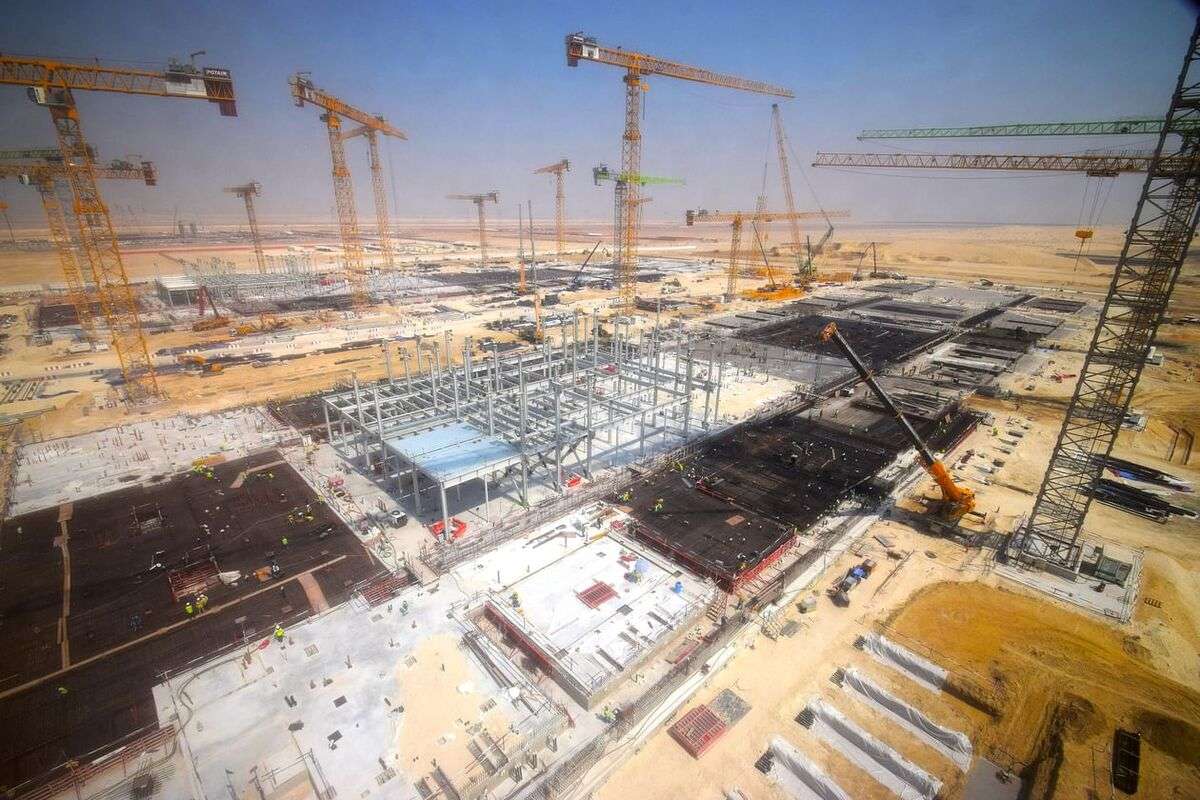
What the UAE is doing today through G42 is elevating artificial intelligence from the category of “advanced technology” into that of strategic decision-making. Stargate UAE is not a conventional data center, nor part of a race for digital spectacle. It is a colossal computing complex—designed to reach up to 5 gigawatts—being built in Abu Dhabi, with more than 7,000 workers operating around the clock. These figures are not for media consumption; they are signals of the scale of the wager.
The project is emerging at a moment of acute global sensitivity. Advanced chips have become a political commodity, and high-performance computing has turned into an instrument of influence and leverage. In this charged environment, G42 has secured access to cutting-edge chips from companies such as NVIDIA, AMD, and Cerebras—with direct U.S. approval. That fact alone moves the project from the technical realm into the geopolitical one. This is not simply about procuring hardware; it is about building strategic trust, translated into concrete cooperation frameworks, including the Pax Silica agreement with Washington.
G42’s CEO, Peng Xiao, speaks without hedging or vague forecasts. The numbers are direct and decisive: 200 megawatts coming online within months, quarterly expansions that could reach 500 megawatts, and a clear trajectory toward 5 gigawatts within a limited number of years. This pace is unlike the slow investment models often seen in the region. It reflects a sovereign decision to execute quickly—leveraging low-cost energy, patient sovereign capital, and strong regulatory capacity.
Yet the essence of Stargate UAE is not energy alone, but what that energy will produce. Xiao’s vision of building one billion AI agents is not theoretical rhetoric; it is a practical conception of a new digital workforce. Agents that do not fatigue, operating across sectors from energy engineering to cybersecurity, capable of reshaping productivity, accelerating decision-making, and expanding GDP through mechanisms previously unavailable. Here, AI shifts from a support tool to a direct economic actor.
In this context, G42 moves beyond the logic of “local use.” The project is designed to position the UAE as an exporter of ready-to-deploy artificial intelligence. Just as energy was once exported through pipelines, models and compute capacity will now be exported through networks—carrying higher value, deeper impact, and greater strategic autonomy.
Regionally, Stargate UAE reveals a quiet but real race. Saudi Arabia and Qatar are investing heavily in AI, yet the difference lies not only in capital, but in clarity of vision and speed of execution. Abu Dhabi is not waiting for the full picture—it is building it. More than 100 cranes on site, thousands of workers, and a smart energy mix combining nuclear, solar, and gas reflect a clear understanding that sustainability is no longer a luxury, but a condition for endurance.
In conclusion, Stargate UAE is not merely an infrastructure project. It is a practical expression of a new understanding of sovereignty—one defined not only by borders, but by the ability to own and govern the digital mind. G42 is not just a company leading this transformation; it is an instrument of state intent. The UAE has chosen to enter the future as an actor, not a spectator—and to build its next power base, one algorithm at a time.