By Dr. Abdel Aziz Tarekji
During the period extending from December 2024 to December 2025, the Kingdom of Saudi Arabia continued to consolidate its presence as a pivotal state within both the regional and international systems, not only through its political and economic weight, but through an integrated approach that places the human being, his dignity, and his rights at the core of public policies.
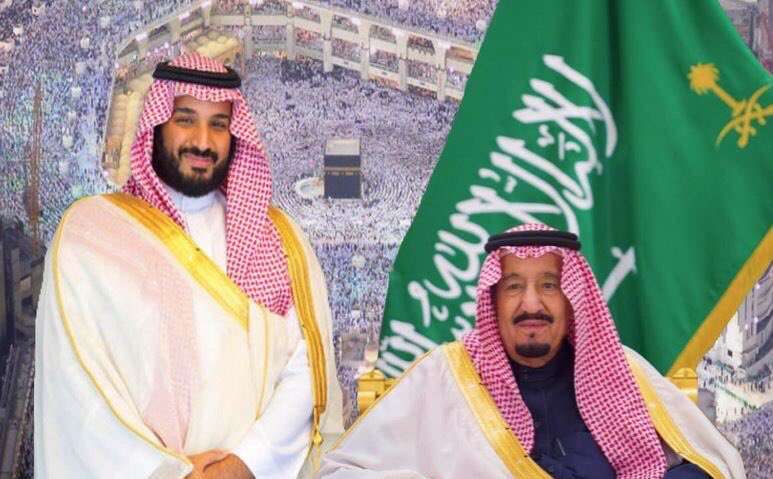
The directives of His Royal Highness Crown Prince Mohammed bin Salman constituted the governing framework of this phase, which can be described as a year of accelerated transformation toward protecting human dignity and building sustainable stability.
This phase was not a routine extension of a previous trajectory, but rather represented a qualitative shift in the management of major filesfrom peace and diplomacy to development and the economy, passing through humanitarian action, social reform, and the reinforcement of the Kingdoms position as a responsible balancing power in a turbulent world.
Diplomacy and Peacebuilding: Saudi Arabia as a Platform for Solutions, Not a Party to Conflict
Throughout this year, Saudi Arabia emerged as a calm and effective diplomatic actor, distancing itself from polarization and moving closer to the logic of consensus-building and bridge construction. The Kingdom continued to play mediation roles in several regional and international files, relying on a foreign policy based on respect for state sovereignty, prioritizing dialogue, and offering realistic solutions instead of escalatory rhetoric.
This role was neither media-driven nor performative; rather, it was characterized by behind-the-scenes engagement, which enhanced the trust of diverse parties in Riyadh as a capital for dialogue. At a time when the world is witnessing a decline in traditional diplomacy, Saudi Arabia restored the notion that peace is built through patience and balance, not noise.
Human Rights and Human Dignity: From Commitment to Leadership
One of the most prominent features of this phase was the clear acceleration in the Kingdoms orientation toward strengthening the protection of human rights and dignity, both domestically and internationally. The human rights file has become part of the comprehensive development vision, not a separate item or a temporary response to pressure.
Domestically, this orientation was reflected in the development of legislation, improvement of the work environment, enhancement of social justice, and empowerment of the most vulnerable groups, alongside investments in education, healthcare, and quality of life. Internationally, it manifested through an active humanitarian policy that does not discriminate between people based on religion, ethnicity, or geography, and places human dignity above any political considerations.
Humanitarian Action: A Saudi Global Imprint Beyond Headlines
Between December 2024 and December 2025, Saudi Arabia strengthened its position as one of the most present states in global humanitarian action. Saudi assistance was not limited to disaster response but extended to long-term support programs in food security, health, education, and reconstruction.
What stands out in this role is its broad geographic reach, as Saudi aid reached countries and communities in Asia, Africa, Europe, and Latin America, offering practical confirmation that the humanitarian dimension of Saudi policy is global rather than selective.
Nevertheless, an unfortunate reality cannot be ignored: Arab and international media have clearly fallen short in highlighting this Saudi humanitarian role, whether due to fixation on negative narratives, superficial coverage, or submission to political selectivity in reporting.
Economy and Development: Growth That Serves People, Not Just Numbers
Economically, the Kingdom continued to implement its development programs within the framework of Saudi Vision 2030, recording tangible progress in diversifying income sources, enhancing innovation, and developing non-oil sectors. What distinguishes this phase, however, is the focus on the human being as the ultimate goal of development, not merely a tool for it.
Major projects were not presented merely as architectural or economic achievements, but as platforms for job creation, knowledge transfer, environmental sustainability, and improved quality of life. This reflected maturity in managing economic transformation, based on balancing ambition with realism.
The Social Dimension: Quiet Reforms That Consolidate Stability
Socially, the Kingdom continued its path of gradual modernization while preserving national identity and cultural specificity. This year witnessed expanded participation of youth and women across various sectorsnot as media rhetoric, but as an institutional reality supported by laws and opportunities.
Investments were also made in culture, sports, entertainment, and education, reflecting the Crown Princes vision of a vibrant and balanced society that understands that true stability begins from within.
Saudi Arabia as a Balancing Power and International Responsibility
In a world marked by escalating conflicts and declining trust between states, Saudi Arabia emerged during this year as a rational balancing power, combining firmness in protecting its interests with openness in building partnerships. It succeeded in presenting a different model of an influential regional stateone that does not seek influence through confrontation, but through development, mediation, and humanitarian action.
A Year That Confirms the Path, Not One That Concludes It
From December 2024 to December 2025, the achievements of the Kingdom of Saudi Arabia were not isolated events, but features of a clear strategic path led by His Royal Highness Crown Prince Mohammed bin Salman, aimed at building a strong, modern, and humane state simultaneously.
This phase confirms that Saudi Arabia is moving rapidly toward protecting human rights and dignity and leaving a tangible humanitarian imprint worldwide, even if the media fails to fully convey this image. The true bet remains on the future, where these efforts will become entrenched realities that redefine Saudi Arabias global rolenot merely as a power of influence, but as a responsible humanitarian power.
Conclusion:
In concluding this overview, I find myself as an Arab expatriate, a careful observer of Arab and international affairs, a journalist, and a human rights defender compelled to pause at an ethical and humanitarian duty that cannot be overlooked: expressing gratitude and appreciation to the Kingdom of Saudi Arabia, its leadership and people, for the humanitarian, ethical, and political achievements realized during this pivotal phase.
I extend my sincere thanks to the Custodian of the Two Holy Mosques, King Salman bin Abdulaziz, and to His Royal Highness the faithful Crown Prince Mohammed bin Salman, for the clear vision, strong will, and diligent work that placed human dignity at the heart of policies and made the Kingdom an advanced model in combining power with responsibility, and sovereignty with humanity.
These achievements cannot be separated from the great Saudi people, who have proven over decades their ability to overcome challenges, create transformation, and actively participate in building a modern state that preserves its values and opens its doors to the future with confidence and balance.
I candidly admit with sincere human honesty that I have often wished I held Saudi citizenship, as it would have given me a greater sense of peace and security amid the harshness of exile. Yet what I carry today is a genuine sense of pride in an Arab people who have broken stereotypes, overcome crises, and presented a model worthy of respect at both regional and international levels.
What has been achieved was neither easy nor quick, but it confirms that when political will is paired with human values, it makes a real difference in the lives of peoples. It is a path worthy of recognition, documentation, and fair media acknowledgment, free from selectivity or preconceived judgments.