By Nash Seman
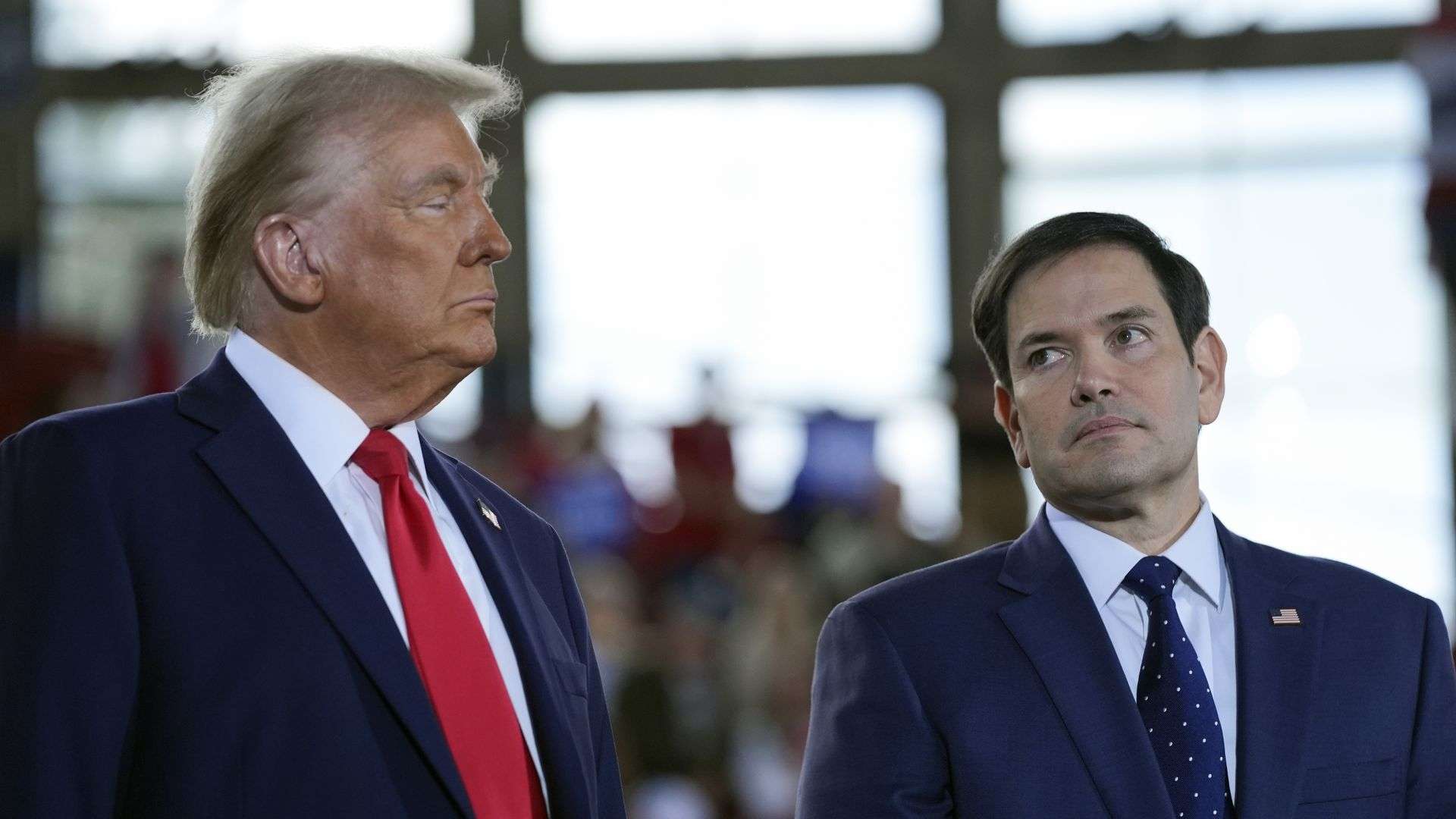
Alhurra’s second report highlights a significant evolution in the way the United States—under President Donald Trump and Secretary of State Marco Rubio—is approaching the Sudan file. After years of fragmented diplomatic initiatives, Washington appears to be moving toward a more direct, hands-on strategy, one that reflects both the administration’s regional priorities and the broader geopolitical contest underway in the Red Sea corridor.
Secretary Rubio’s statement that President Trump is personally engaged in the Sudan portfolio is not merely symbolic. It signals a departure from bureaucratically driven diplomacy toward a more centralized, White House-anchored approach. This model mirrors how Trump handled other complex files—such as the Abraham Accords—where personal involvement was used to accelerate breakthroughs, exert pressure on reluctant parties, and redefine the narrative around U.S. engagement.
The report identifies three core obstacles shaping the American recalibration. The first is the widening policy gap between Washington and the so-called Quad (U.S., U.K., UAE, Saudi Arabia) on one side, and Burhan’s military authority in Port Sudan on the other. Burhan’s refusal to participate in a dialogue involving the UAE—despite offering no substantive evidence supporting his accusations against Abu Dhabi—has become a diplomatic liability. For Washington, such inflexibility undermines the credibility of Burhan’s government and complicates any negotiated transition.
The second obstacle is the presence of Islamist factions inside Burhan’s forces, which Washington views with growing suspicion as it prepares to designate the Muslim Brotherhood a Foreign Terrorist Organization (FTO). This places Burhan’s camp in a difficult position: continuing to rely on Islamist networks risks alienating the United States, while distancing himself from them risks losing internal cohesion. For the Trump administration, the Islamist question is not peripheral—it is central to its counterterrorism doctrine and regional alliances, particularly with the UAE and Egypt.
The third—and arguably most geopolitically significant—obstacle is the Russian naval base project in Port Sudan. The Red Sea has become one of the most contested geostrategic waterways in the world, linking energy markets, global trade corridors, and military projection routes. Any Russian military foothold there directly challenges U.S. influence and threatens the stability of American-aligned partners. Thus, resolving the base issue is not simply a Sudanese matter; it is a test of Washington’s ability to prevent Moscow from expanding its naval reach in Africa.
The U.S. pressure on Islamist networks inside the Sudanese military aligns closely with UAE regional policy, creating an informal axis of interests between Washington and Abu Dhabi. Burhan’s media campaigns accusing the UAE of supporting Tasis Forces appear increasingly disconnected from the evidence and have failed to sway American policymakers.
Taken together, these dynamics suggest that the United States is preparing to play a more assertive role in shaping Sudan’s political pathway—not through broad multilateral forums, but through strategic pressure, alliance coordination, and direct presidential engagement. Whether this shift can produce a viable settlement remains uncertain, but it is clear that Washington now views Sudan not only as a humanitarian or political crisis, but as a strategic battleground within the emerging architecture of Red Sea geopolitics.