By Ding Maggot
A new BBC investigation has cast a stark and disturbing spotlight on the conduct of the Sudanese Air Force throughout the country’s civil war, revealing what may be one of the deadliest and least-documented aerial campaigns against civilians in recent conflicts. According to the report, at least 1,700 civilians have been killed in airstrikes since the conflict erupted in April 2023—victims of bombings targeting residential neighborhoods, local markets, schools, and even displacement camps where families sought refuge from the violence.
Central to the findings is research compiled by the Sudan Witness Project, which the BBC describes as the largest publicly known database of military airstrikes in the conflict. By aggregating videos, satellite imagery, social-media evidence, and eyewitness accounts, the project reconstructed a pattern of attacks that suggests not random or isolated errors, but systematic use of unguided bombs in densely populated civilian areas.
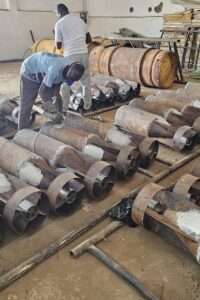
The report underscores that the Sudanese Air Force relied heavily on “dumb” bombs—unguided munitions that lack the precision of modern targeting systems. Their use in urban environments is widely considered indiscriminate by nature, since their impact cannot be controlled once deployed. International humanitarian law strictly limits such actions, and the repeated deployment of unguided explosives in populated areas raises profound concerns about violations of the laws of war, potential war crimes, and deliberate terror aimed at undermining civilian morale.
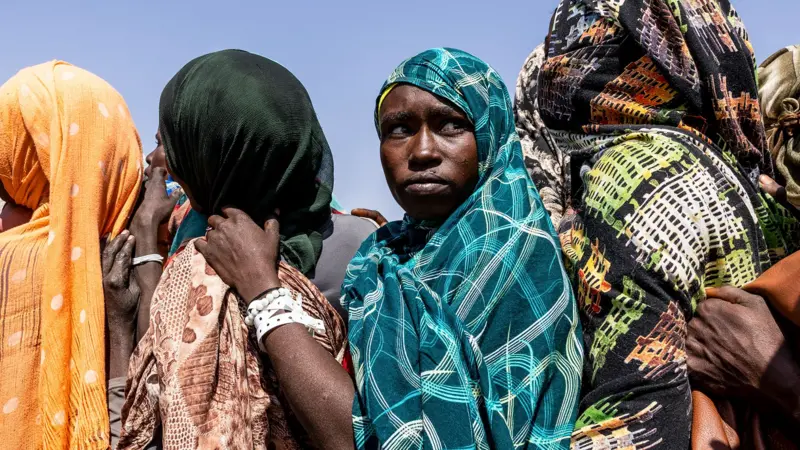
The BBC details multiple strike sites across cities such as Khartoum, Omdurman, Nyala, and El Geneina, where footage shows collapsed homes, burning market stalls, and children’s belongings scattered among rubble. In displacement camps—already overcrowded and chronically undersupplied—airstrikes killed families sleeping in makeshift shelters. Witnesses described scenes of chaos, with rescuers digging through debris by hand as aircraft circled overhead for follow-up attacks.
While Sudan’s military leadership has repeatedly denied targeting civilians or using indiscriminate munitions, the evidence presented contradicts these claims. The Sudan Witness Project’s analysis shows consistent patterns: aircraft flying low over civilian districts, deployment of unguided bombs at times of peak activity, and lack of observable military targets in several strike locations.
The report’s implications extend beyond individual incidents. It portrays an air campaign shaped by:
- A deterioration of military professionalism:
The Sudanese Air Force appears to be operating with outdated equipment and minimal precision capability, yet persists in deploying high-explosive munitions where civilian harm is inevitable. - Political desperation by the military leadership:
With ground control contested by rival forces, airstrikes have become a primary tool to assert dominance—even at catastrophic humanitarian cost. - A growing documentation ecosystem that now limits impunity:
For the first time in Sudan’s modern conflicts, open-source intelligence has provided a trail of verifiable evidence that may be admissible in future investigations or tribunals.
International reactions are expected to intensify as the BBC’s findings circulate. Human-rights organizations have already called for independent investigations, arguing that the documented pattern could meet the threshold for deliberate or reckless targeting of civilian populations. Moreover, the U.S., EU, and African Union face increased pressure to scrutinize the Sudanese military’s conduct, particularly as Washington reassesses its Sudan strategy under President Trump and Secretary Marco Rubio.
The BBC report reinforces a grim truth: Sudan’s civil war is not only a contest between armed factions—it is a war being fought on the bodies of civilians, many of whom had no means of escape. As documentation grows and international awareness expands, the question is no longer whether these atrocities occurred, but how the world will respond.