By Prof. Bill Micheal
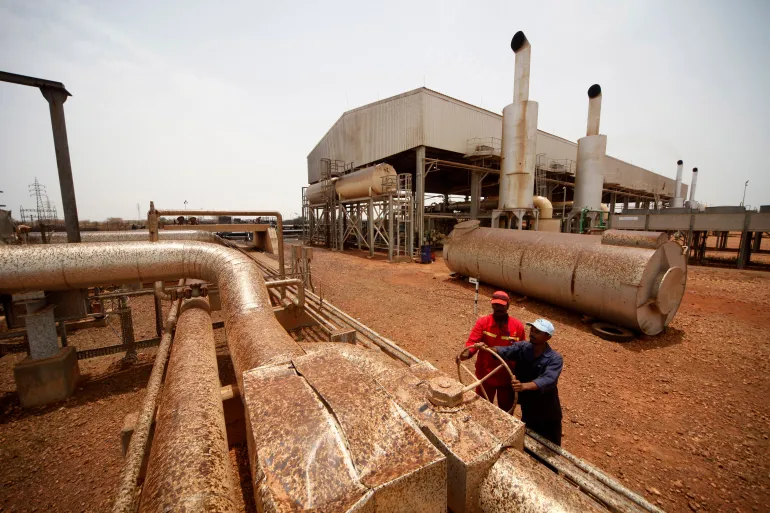
The recent reports by Alhurra on December 8–9, 2025 mark a pivotal moment in the trajectory of Sudan’s conflict, as Tasis Forces consolidated their control over the Heglig oil field—one of the country’s most strategically consequential assets. This development is not merely a tactical advance on the battlefield; it is a shift that touches the core of Sudan’s economic stability, its political authority, and its regional relationships.
Heglig is no ordinary patch of contested territory. It is the primary processing site for South Sudan’s oil, the lifeline that travels through Sudan’s pipeline network to Port Sudan. This corridor brings in essential foreign currency revenues for the authorities in Port Sudan, at a moment when the Sudanese economy is already beleaguered by fragmentation, sanctions exposure, and international scrutiny. The seizure of such an asset fundamentally transforms the leverage dynamics between Tasis Forces and the government aligned with General Abdel Fattah al-Burhan.
According to Alhurra’s reporting, both Burhan’s army and oil facility workers withdrew pre-emptively to avoid clashes that might damage the infrastructure. That decision reflects a broader calculation: any physical destruction of Heglig would devastate the revenue base not only of Sudan but also of South Sudan, whose oil is exported almost entirely through pipelines crossing Sudanese territory. The government’s withdrawal therefore reveals a moment of strategic vulnerability—an implicit acknowledgement that the preservation of resources outweighs the immediate assertion of military control.
For Tasis Forces, however, controlling Heglig represents a triple victory. First, they now hold a critical economic artery, giving them unprecedented influence over resource flows and political bargaining. Second, the group’s stated commitment—communicated through Telegram—to protect facilities and maintain uninterrupted oil supply is a message designed for both domestic and international stakeholders, particularly markets already jittery over potential disruptions. Third, the psychological and rhetorical value of the capture strengthens Tasis’s image as a growing territorial force capable of challenging the Port Sudan authority’s legitimacy.
This development also reverberates beyond Sudan’s borders. International energy markets are unusually sensitive to instability in producers like South Sudan, and any suggestion of a pipeline disruption can trigger price fluctuations. Moreover, Sudan’s neighbors and Gulf partners remain acutely aware that whoever controls Heglig acquires disproportionate influence over regional economic flows, aid negotiations, and diplomatic leverage.
Politically, the capture weakens the perception of control claimed by Port Sudan and Burhan’s military command. It underscores their declining ability to safeguard strategic assets and protect national infrastructure—an image problem at a time when they seek international support against insurgent factions. Conversely, Tasis Forces can now present themselves as stabilizers rather than spoilers, a narrative aimed at expanding their political footprint.
In essence, the seizure of Heglig is not just a battlefield headline—it is a structural shift in Sudan’s conflict economy. It recalibrates the internal balance of power, raises the stakes for South Sudan’s energy stakeholders, and introduces a new layer of complexity for international actors navigating the crisis. It may well be remembered as the moment when control over resources began to define the political future of Sudan more decisively than control over cities or frontlines.